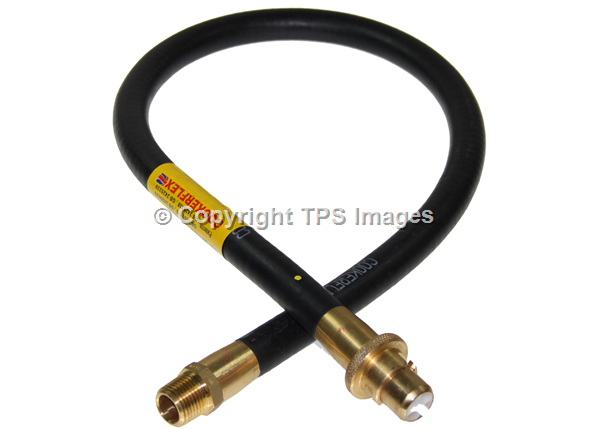
Gas Cooker Hoses from Cooker Spare Parts
There are a number of different gas hoses on the market today, so when it comes to replacing your gas cooker hose, it can all seem rather overwhelming! In this blog post, we will aim to explain to you the different types of gas hose and what they are used for; hopefully, when you come to purchase your replacement gas cooker hose, you will be relatively confident that you have purchased the correct one.
What is a gas cooker hose?
a gas hose is a cylindrical tube that has been designed specifically for carrying gas from one location to another, with as little leakage as possible. Because gas is a very small particle it can leak out of the smallest gaps, so many gas cooker hoses have to be specifically constructed in such away they prevent gas leaks for many years. Many gas hoses are constructed from rubber and different kinds of plastic because these materials have been constructed in such away they are leak resistant.
Over time gas pipes can become worn and start showing signs of wear and tear, it is then you will have to start thinking about purchasing and fitting a new gas cooker hose.
Different Types of Gas Hoses:
There are 5 types of gas cooker hoses, standard gas hose – natural gas, Standard gas hose – LPG, Microline or micropoint hoses – natural gas, Microline or micropoint hoses – LPG, and catering hoses in LPG and Natural gas.
There are 2 types of gas oven, a gas oven that runs off Natural gas (methane and ethane) and an oven that runs off LPG gas (propane and butane), and each oven requires different gas piping. Natural gas is lighter than LPG gas, so the gas hose has to be manufactured to different standards. Therefore it is important that when you are purchasing a new gas hose you are confident you have the correct one for your appliance.
Standard Hoses - Natural Gas
If you have a natural gas oven, you will find that there are two different types of hose we stock. A straight bayonet hose, or an angled bayonet hose. These both have a plug-in bayonet socket and a 1/2” BSP tapered male threaded fitting at the other. If you are unsure which hose you need, simply look at the connection of your current Gas Cooker Hose to determine which would be most suitable.
The standard hoses that we supply are suitable for all cooker brands and models, and have been manufactured to BS 669-1:1989.
Straight bayonet hose
GFT 1101 - 3' straight bayonet hose
GFT 1112 - 4' straight bayonet hose
Angled Bayonet Hose
GFT 1137 - 3' angled bayonet hose
GFT 1137 - 4' angled bayonet hose
Standard Hoses - LPG
If you are experiencing issues with your LPG gas cooker hose, then don’t worry, we have you covered. We stock a 4ft LPG straight bayonet hose, which has been manufactured to conform to BSI to EN 14800:2007 standards. Meaning that this universal replacement is meets the high standards of your original parts.
plug-in bayonet socket and a 1/2” BSP tapered male threaded fitting at the other.
Manufactured from stainless steel 316L corrugated, braided hose with a PVC cover. Hoses are manufactured, BSI approved and Kitemarked to BS EN 14800:2007 and have CE certification.
Compatible with BS 669-1 design and EN 15069 approved sockets. All metal connecting ends enable hose to pass the high temperature test of BS EN 1775.
EU manufactured.
Max. working pressure : 0.5 bar.
For ambient temperatures up to 60°C.
LPG Straight Bayonet Hose
GFT 1136 – 4’ straight bayonet hose
Microline or Micropoint Hoses –Natural Gas
It is very possible that your gas appliance has a smaller connection than standard. In fact this is quite common. These connections require a microline or a micropoint hose. Here at Cooker Spare Parts, we supply microline or micropoint hoses in 2 different sizes, 3 foot and 4 foot.
These hoses conform to BS 669-1:1989 standard, so when you purchase this gas cooker hose, you can be confident that you are getting the best quality. Click the links below for more information.
Natural Gas hoses produced to BS 669-1:1989. Right-angled plug in hose connection which keeps the hose close to the wall. Other end of hose is 1/2" BSP taper male. For ambient temperatures up to 70°C, and 95°C touch temperature. Manufactured in the UK
GCA 2001 - 3` x(3/8" bore) microhose angled connection
GCA 2001 - 4` x(3/8" bore) microhose angled connection
Catering hoses in LPG and Natural Gas
Here at Cooker Spares, we don’t only supply domestic gas cooker hoses, but we also supply restaurants and various catering companies with their gas hoses.
Our catering hoses feature a male to female connection and has a BSP measurement of ½” (or ¾” in the case of GFTC3901) and like all of our gas hoses, they have been produced to the meet the industry standard. This means that they are capable to withstand the daily and often harsh environments of the commercial kitchen.
Hoses are fully welded, corrugated stainless steel, catering gas hose assemblies, manufactured under rigorous controls to meet the requirements of gas supply for catering appliances using 1st, 2nd, 3rd family gases.
Hoses are supplied with a quick release valved coupler which cuts off the supply of gas when disconnected. This quick release coupler is to be installed in accordance with BS 6173 – 1990 standard on mobile catering units, with the restraining device supplied. The quick release caterquip assemblies are approved to BS 669 Part 2 : 1997.
The restraining device meets the required minimum tensile load specification as per BS 669 Part : 2 1997
To find out more about our range of catering hoses, click the links below.
Replacing your Gas Cooker Hose
If you are not sure if your gas cooker hose is in need of replacing it may be a good idea to check. To do this, first make sure your gas supply is switched off at the mains.Pull your cooker out and you will find a black tube attached to the back of your cooker. Have a look at the condition of the hose. If you see signs of damage or wear and tear then simply type in the manufacturer and model of your cooker into our search bar on the home page and we will return the parts that are suitable for your cooker.
If you have any questions about gas cooker hoses, or you are struggling to find the correct part for your cooker, then please don’t hesitate to contact us either by phoning 02920 452 510 or emailing us on enquiries@cookerspareparts.co.uk where a member of our customer service team will be more than happy to assist you.